Selling an Atlanta car that is broken, flooded or missing parts
You can sell a car in Atlanta that will not start, sat in flood water or lost its catalytic converter. The partner buyer gives offers on non-running cars and cars with missing parts, and it arranges and pays for the tow. What changes is the Georgia side. A paid insurance total loss on a car that is not repaired makes it a salvage vehicle that cannot be driven on public roads, and metro Atlanta's emissions test looks at the converter. This page covers each condition in turn, with the state rule behind it and what to tell the buyer.
Sources re-checked .
Short answer
Yes, a car in that shape can still be sold. The partner buyer gives offers on non-running cars and cars with missing parts and pays for the tow. In Georgia, a paid insurance total loss on a car that is not repaired makes it a salvage vehicle, and metro Atlanta's emissions test includes a look at the catalytic converter.
Georgia DOR: salvage titles; Georgia's Clean Air Force: before you test
How the condition shapes the buyer's offer
The partner buyer prices a car from what you tell it. You enter the vehicle's details online, and the buyer's system returns a free offer with no obligation, built from the car's condition and market data. The buyer's own page is direct about cars in rough shape: "Vehicles that are non-running or missing parts can still receive a cash offer".
Your description carries the deal. The amount shown online is the amount the buyer pays at pickup, and the driver checks the car before handing you a check. That inspection is the condition on the number: the offer stands for the car you described. Leave out a water line, a missing part or a warning light, and the offer was priced for a different car than the one the driver finds.
Before you open the form, write down five things. Does it start? Does it move under its own power? Has water been inside the cabin? Is anything missing? What brand, if any, does the title carry?
Source: The buyer: selling in any condition; The buyer: offer, pickup and payment.
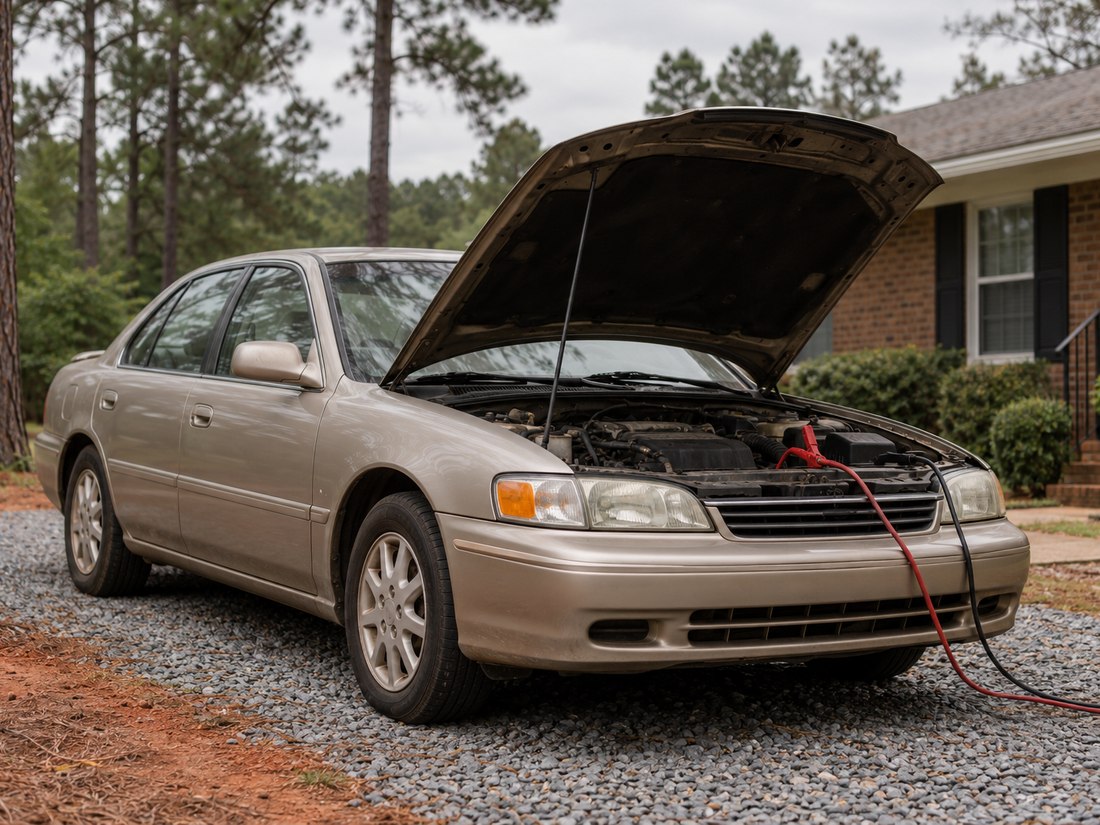
Won't start, won't roll: the tow is on the buyer
You do not need to jump it, repair it or push it to the curb. The buyer arranges the pickup and covers its cost, at a time that suits you, and the buyer's driver brings the truck.
Not running is not, on its own, what makes a car salvage in Georgia. The Department of Revenue's test turns on damage that would take two or more major component parts to restore, or an insurer's paid total loss claim on a car that has not been repaired. Its short list of major parts names the front clip, the rear clip and roof, the frame, a complete side, and the engine and transmission, which count together as one item. A dead battery or a failed starter is not on it at all.
Source: The buyer: selling in any condition; The buyer: offer, pickup and payment; Georgia DOR: what are component parts; Georgia DOR: salvage titles.
Storm and flood damage and the total loss question
Start with your insurance policy. Georgia's Office of Insurance and Safety Fire Commissioner describes the coverage that reaches weather and water: "Comprehensive coverage pays for damage to your auto from almost all other causes, including fire, severe weather, vandalism, floods and theft." The page calls it optional, so check that your policy has it.
If the insurer pays a total loss claim, the car's status changes. Under DOR's definition, a car with a paid total loss claim that has not been repaired is a salvage vehicle, whatever the extent of the damage. Whether the insurer keeps the car or you do, the insurer files the salvage title application with DOR.
A car branded salvage stays off the road: under DOR's rule it may not be driven on Georgia's public roads at all. The buyer says that in many states, cars with salvage, rebuilt or missing titles may still be eligible for sale. The salvage and rebuilt title page explains the Georgia brand and the rebuild path.
If you bought the car from out of state, read the title brand. DOR counts a car titled elsewhere and branded Total Loss, Salvage, Fire, Flood or Water as a salvage vehicle in Georgia. Put the brand in your description.
Source: Georgia Insurance Commissioner: auto coverage; Georgia DOR: salvage titles; Georgia DOR: insurer keeps a salvage vehicle; Georgia DOR: owner keeps a salvage vehicle; The buyer: selling in any condition.
Selling after a catalytic converter theft
Report the theft to the police first. Inside the City of Atlanta, that is the Atlanta Police Department. If your policy carries comprehensive coverage, theft is one of the causes the Insurance Commissioner's page lists, so talk to your insurer before you sell.
Then think about metro Atlanta's emissions test. Georgia's Clean Air Force runs the inspection program for 13 metro counties, Fulton and DeKalb among them. For 2026 registration it applies to 2002 to 2023 model year gas cars and light trucks of 8,500 pounds gross vehicle weight rating or less, tested every year before the registration date. The test has two parts, and the second is "A visual inspection of the catalytic converter to check for tampering or removal."
The test also reaches the sale itself: when the buyer will register the car in a covered county, a seller inside the 13 counties must see that it has a passing inspection at the time of sale. A car with no converter is unlikely to pass that visual check. The buyer gives offers on cars with missing parts. Mark the converter as missing in your description, ask before pickup what the car is being bought for, and read the parts and salvage rules on the emissions test page.
Source: Georgia's Clean Air Force: before you test; Georgia's Clean Air Force: program counties; Georgia Insurance Commissioner: auto coverage; Atlanta Police Department; The buyer: selling in any condition.
Older cars, high odometer readings and recalls
Age alone does not change how a Georgia sale works, but two rules shift as a car gets older.
Emissions testing follows the model year, not the mileage. In the program counties, cars 25 model years old or older are exempt, which for 2026 registration means 2001 and older. So are 2024 and newer models.
The odometer rule eases with age as well. The federal exemption in 49 CFR 580.17 reaches every 2010 or older model sold in 2026, while DOR's odometer page still words its own exemption as 20 model years or older. The actual mileage is an entry DOR accepts either way. The Georgia paperwork page explains the gap and shows where the reading goes.
Open recalls come last. Check the car on NHTSA's recalls page before you ask for an offer, and put any open recall you find in your description.
Source: Georgia's Clean Air Force: before you test; Georgia DOR: odometer disclosure; 49 CFR 580.17 odometer exemptions; NHTSA: recalls; The buyer: selling in any condition.
Example: a 2009 DeKalb sedan with its converter cut out
This is a labelled example built from the rules above, not a real sale. Say you own a 2009 gas sedan registered in DeKalb County. Thieves cut out the catalytic converter, and you never filed an insurance claim.
- Title: no paid total loss claim, and a converter is not on DOR's list of major component parts, so the car is not a salvage vehicle on these facts.
- Emissions: a 2009 model falls inside the 2002 to 2023 range for 2026, and DeKalb is a program county. If the car will be registered in a covered county, you as a DeKalb seller must make sure it has a passing test at the time of sale, and the visual check looks for a removed converter. Ask the buyer before pickup what the car is being bought for.
- Odometer: a 2009 model sold in 2026 is exempt under the federal rule but is not yet 20 model years old, DOR's wording, so write the actual mileage in the title box.
- The sale: describe the converter as missing. The buyer's driver picks it up at the buyer's cost, inspects it and hands you a check.
Source: Georgia DOR: what are component parts; Georgia's Clean Air Force: before you test; 49 CFR 580.17 odometer exemptions; Georgia DOR: odometer disclosure; The buyer: selling in any condition.
Questions about selling a damaged car in Atlanta
Do I have to fix a car that won't start before I sell it?
No. The buyer's page says non-running cars and cars with missing parts can still get an offer, and the buyer pays for the tow. Repair spending only makes sense if it changes the number by more than it costs. Describe the problem in the form so the offer fits the car (the buyer: selling in any condition).
Is a flooded car automatically a salvage car in Georgia?
Not by the water alone. Under DOR's definition, it becomes a salvage vehicle when an insurer pays a total loss claim and it is not repaired, or when the damage needs two or more major component parts. A car titled in another state with a Flood or Water brand also counts (Georgia DOR: salvage titles).
Pick the page that matches your car
If an insurer has already paid on the car, read the Georgia salvage and rebuilt title page next. If the car is ready to go as it is, see how the buyer's offer and pickup work, or call (943) 230-8677 to talk it through with a person.
More on selling a car in Atlanta
- PaperworkHow an Atlanta seller signs a Georgia title, when DOR wants a T-7 bill of sale, the 2026 odometer rule, the buyer's 7-day titling step, TAVT and the plate.
- Emissions testWhich of metro Atlanta's 13 counties and which model years need an emissions test, what Georgia asks of a seller, and what to do when a car fails.
- Title problemsLost Georgia title, a lender still on it, an owner who died or two owners on the line: the DOR forms and fees an Atlanta seller needs first.
- Junk carJunk car in Atlanta: the partner buyer, a Georgia scrap or parts dealer and what it must collect, the no-title MV-1SP statement, and your plate.
- Where to sellPrivate sale, dealer trade-in or instant offer in Atlanta: how a trade-in cuts Georgia's 7.0% TAVT and when a repair pays.
- Selling privatelyHow to sell a car privately in Atlanta without being scammed: fake checks, overpayment, payment-app and escrow tricks, the Peach Pass sticker and when to sign the Georgia title.