Selling your car to a stranger in Atlanta without losing the car or the money
To sell privately in Atlanta safely, keep the title and the keys until the bank behind the buyer's payment confirms the money is good, then sign the title with the buyer's name already filled in. The scams the Federal Trade Commission warns online sellers about include fake checks, overpayment refunds, fake payment notices, stolen verification codes and escrow services you have never heard of. This page covers what to do before you list, what the agencies say about meeting buyers, how to check a cashier's check, and the order of the handover under Georgia Department of Revenue rules.
Sources re-checked .
Short answer
Keep the title and keys until the buyer's payment is confirmed by the bank it came from, on a number you looked up yourself. Refuse any check for more than your price, never send money back, and check any escrow service you have never heard of. Then sign the Georgia title with the buyer's name filled in, complete Form T-7 and take your plate off the car.
FTC: fake check scam targets online car sellers; Georgia DOR: responsibilities of sellers and buyers
Before the ad goes up: title, data and the Peach Pass
Georgia's Department of Revenue (DOR) says an owner who is not a licensed dealer "must obtain a title in their name for the vehicle before transferring ownership" when the vehicle needs a Georgia title. If the title is lost, shows a lender, or is still in a late relative's name, the title problems page covers each case. Print DOR's bill of sale, Form T-7, ahead of time.
Next, the car's memory. The FTC warns that a car can hold your phone contacts, app log-ins, location data such as the routes you drive to home and work, and garage door codes for your home or office. Use the factory reset if the car has one. Then cancel or transfer services such as satellite radio, wi-fi hotspots and data plans, and disconnect any app that controls the car or finds it. Clear any garage door code stored in the car.
Last, the toll sticker. Peach Pass wants the transponder off the windshield before ownership changes, and a transponder that has been removed cannot be put back on any car. Taking the car off your toll account comes after the sale; the after-you-sell page has those steps.
Source: Georgia DOR: transfer a vehicle titled in Georgia; FTC: clear your personal data before selling; Peach Pass FAQs.
Meeting buyers and test drives: the official guidance
The FTC notes that many selling sites recommend a local buyer you can meet in person. Its alert for car sellers shows why distance matters: the fake check scam it describes starts with a buyer who says they are not local and cannot look at the car in person.
Before any test drive, ask for the buyer's full legal name as it appears on their Georgia driver's license or ID card. You will need it anyway, because DOR's title instructions ask for the purchaser's name in that exact form, along with their current address.
The Atlanta Police Department's website could not be read when this page was checked, so this page names no meeting spots. If you want to meet at a police facility, ask your APD zone precinct first.
Source: FTC: selling stuff online; FTC: fake check scam targets online car sellers; Georgia DOR: transfer a vehicle titled in Georgia.
How the overpayment check scam hits car sellers
Someone messages about your car, says they are not local and cannot see it in person, and sends a check as a deposit to hold the car. The check is for more than you expected. Then comes the request to send back the extra. The FTC's car-seller alert says the fake check looks real and the funds may even show up in your account, but the bank can take weeks to find out, and when it does, it takes the money back.
Do not accept a check for more than your selling price. Never send money back to anyone who says they overpaid you by check, and never use money from a deposited check to buy gift cards, send a wire or money order, or buy cryptocurrency for anyone who asks. Fake checks come as personal checks, business checks, cashier's checks and money orders, the FTC says, so the type of check proves nothing on its own.
Money showing in your account proves nothing either: by law, banks must make deposited funds available quickly, the FTC explains.
Source: FTC: fake check scam targets online car sellers; FTC: how to spot, avoid and report fake check scams.
Checking a cashier's check before the title leaves your hand
The FTC's check advice for sellers comes down to four steps:
- Ask for a check drawn on a local bank, or on a bank with a local branch, so you can go there in person to make sure the check is valid.
- If that is not possible, call the bank where the check was bought and ask whether it is valid.
- Get that bank's phone number from directory assistance or a website you know and trust. Never use a number printed on the check or one the buyer gives you.
- Do not rely on the money until the bank confirms the check has cleared.
Even a bank saying a check cleared does not prove it was good, the FTC's 2022 alert for online sellers warns. Until the issuing bank says the check is valid, the buyer gets no signed title and no keys. A Georgia title signed over to a stranger is, in practice, the car. If the buyer pushes you to hurry, the FTC's answer applies: an offer that is good now should still be good after the check clears.
Source: FTC: advice on counterfeit check scams; FTC: how to spot, avoid and report fake check scams; FTC: selling stuff online.
Payment apps, verification codes and escrow tricks
The FTC's alert for people selling online lists these:
- Fake payment notices. A buyer sends what looks like a mobile payment notice, or says they paid twice and asks you to refund one payment.
- Verification codes. A buyer asks for a code sent to your phone, to prove you are real. The FTC says scammers use a Google Voice code to set up a Google Voice number linked to your phone number. Never share any verification code with a stranger.
- Mobile payments. The FTC's advice is not to accept a mobile payment from someone you don't know.
- Platform protections. If you are not selling locally, see what seller protections the site offers.
The FTC's check advice suggests that a seller offer the buyer another way to pay, such as an escrow service or online payment service. If the buyer insists on one you have never heard of, read its website, terms of agreement and privacy policy, and call its customer service line. No line, or no clear answers about its reliability, means do not use it.
The same check advice adds a hard stop: if a buyer insists that you wire money back, end the deal. Report any scam attempt to the FTC at ReportFraud.ftc.gov.
Source: FTC: selling stuff online; FTC: advice on counterfeit check scams.
The handover, one step at a time
- Payment confirmed. The bank the check came from has told you it is valid, in person at a branch or on a phone number you looked up yourself.
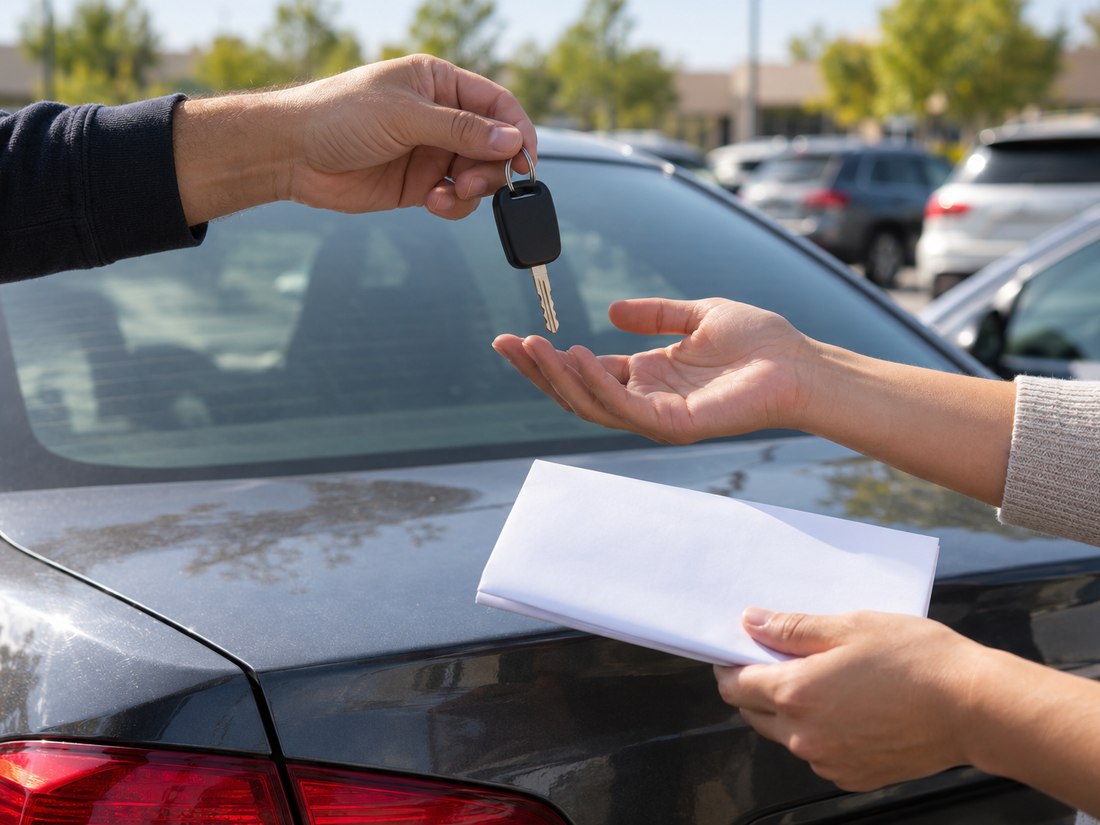
- Title signed. On the assignment on the back of the Georgia title, in blue or black ink, fill in the buyer's full legal name and current address, the date of sale and the odometer reading in whole miles, then print and sign your name. If the car is jointly owned, each seller prints and signs. Any alteration or erasure may void the title. Write the buyer's name in before you hand it over, because DOR says "Do not give or accept a title where the assignment has been signed without the purchaser(s) name entered." DOR's page quotes Georgia Code 40-3-91(c), which makes handing over a title assigned in blank a misdemeanor.
- Bill of sale. Complete DOR Form T-7, and keep copies of it and of the signed title. The paperwork page covers both forms in detail.
- Plate. Take your plate off the car. DOR's seller page lists the plates among the things you keep, so the plate goes home with you, not with the car.
- Registration. Cancel the registration on DRIVES e-Services, or in person with Form MV-18J at the tag office in the county where you live, which for an Atlanta seller is usually the Fulton or DeKalb County Tax Commissioner. DOR says to cancel the registration before you cancel the insurance on that car. If a Peach Pass toll violation later arrives for the car you sold, Peach Pass asks for that DOR cancellation of registration document. The after-you-sell page covers what follows.
From there it is the buyer's job: DOR gives the buyer 7 days from the purchase date to title and register the car at their own county tag office.
Source: Georgia DOR: responsibilities of sellers and buyers; Georgia DOR: transfer a vehicle titled in Georgia; Georgia DOR: I sold my car, what do I do now?; Peach Pass FAQs.
Private sale safety questions
Is a cashier's check safe when I sell my car privately in Atlanta?
Not by itself. The FTC warns that fake checks include cashier's checks, and a bank can take weeks to spot one. Call the issuing bank on a number you found yourself, not one printed on the check, and keep the title until that bank says the check is valid. Even a cleared check can be fake. See the FTC's check advice.
A buyer sent more than my price and wants the difference back. What now?
Stop the sale. The FTC describes this exact pattern in its alert for online car sellers: the extra money is the bait, and the check turns out to be fake after you have sent your own money. Do not accept a check for more than your price, send nothing back, and report it at ReportFraud.ftc.gov. Read the FTC alert for car sellers.
If a private sale feels like too much risk
A private sale puts every check on you. Compare it with a dealer trade-in or an instant offer on the selling options page, or see how the partner buyer's offer, pickup and check work on the offer page. Questions about your sale? Call (943) 230-8677.
More on selling a car in Atlanta
- PaperworkHow an Atlanta seller signs a Georgia title, when DOR wants a T-7 bill of sale, the 2026 odometer rule, the buyer's 7-day titling step, TAVT and the plate.
- Emissions testWhich of metro Atlanta's 13 counties and which model years need an emissions test, what Georgia asks of a seller, and what to do when a car fails.
- Title problemsLost Georgia title, a lender still on it, an owner who died or two owners on the line: the DOR forms and fees an Atlanta seller needs first.
- Any conditionSelling an Atlanta car that won't start, took on flood water or lost its catalytic converter: Georgia's salvage test, the emissions check and the free tow.
- Junk carJunk car in Atlanta: the partner buyer, a Georgia scrap or parts dealer and what it must collect, the no-title MV-1SP statement, and your plate.
- Where to sellPrivate sale, dealer trade-in or instant offer in Atlanta: how a trade-in cuts Georgia's 7.0% TAVT and when a repair pays.