Salvage and rebuilt titles in Georgia, and selling one from Atlanta
You can sell a Georgia salvage car without rebuilding it, once the salvage title is in your name: you assign that title to the buyer. A car becomes salvage when an insurer pays a total loss claim and it has not been repaired, or when restoring it would take two or more major component parts. It cannot be driven on public roads until it is rebuilt, passes inspection and gets a new Georgia plate. This page sets out DOR's rules, the forms and the fees as of October 29, 2026.
Sources re-checked .
Short answer
A Georgia car is salvage after an insurer pays a total loss claim and it is not repaired, or when it needs two or more major component parts. It may not be driven. You can sell it once the salvage title is in your name by assigning that title to the buyer; a rebuilt title needs a licensed rebuilder and a DOR inspection.
DOR: Salvage titles; DOR: Titles for rebuilt or restored vehicles
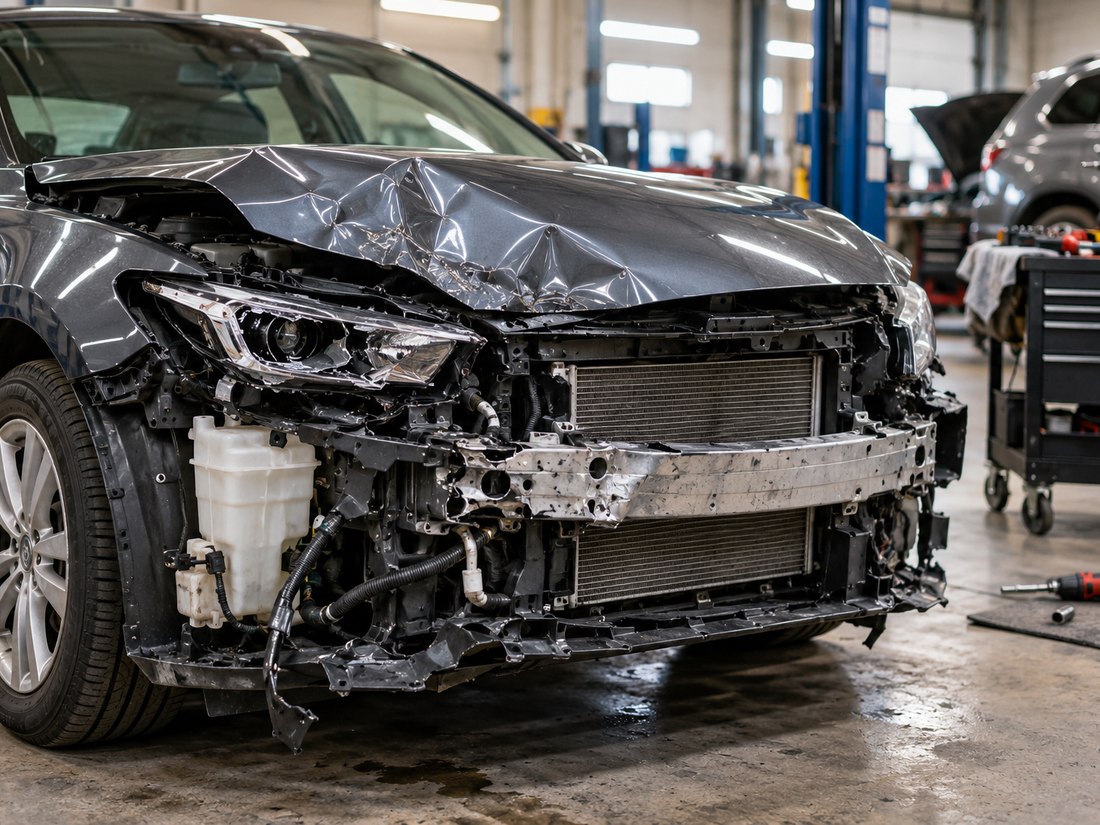
When Georgia classifies a car as salvage
Georgia's Department of Revenue (DOR) uses a fixed test, not a judgment about looks. A vehicle is salvage when any one of these is true:
- Restoring it to working order would mean replacing two or more major component parts.
- An insurance company paid a total loss claim and the car has not been repaired, however light the damage.
- It was imported, damaged in shipping and disclaimed by the maker, and never sold at retail or titled.
- Another state titled it with a Total Loss, Salvage, Fire, Flood or Water brand.
DOR's major component parts are the front clip, the rear clip and roof (a soft top counts), the engine and transmission, the frame, and a full side of the car. Two of them make a car salvage with no insurer involved.
The status limits what the car may do. DOR's page puts it in one line: "Salvage vehicles cannot be operated legally on public roads in Georgia." A salvage car leaves an Atlanta driveway on a trailer or a tow truck, not under its own power.
You kept the car after the insurer totaled it
The insurer keeps it. The insurance company applies for a salvage title in its own name within 30 days of the settlement date. As of October 29, 2026, DOR lists an $18 title fee and a $75 TAVT fee for that filing. That filing is the insurer's, not yours.
You keep it. The insurer applies in your name. It sends DOR's Salvage Unit Form MV-1S (the salvage title application), the original title if there is one, a lien release on Form T-4, Form T-56, your Georgia plate and registration receipt, Form T-158 for the plate, and the $18 title fee. Form T-56, which you initial and sign, tells you to remove the plate at once; the car must be rebuilt, pass a state inspection and get a new plate before anyone drives it.
The same form tells you when a sale becomes possible: "You cannot sell this vehicle until you have obtained a salvage title in your name." A cleared settlement check does not make the car ready to sell. Ask the insurer where the MV-1S stands first.
For a car ten years old or older, DOR says the insurer need not apply for a salvage title before paying the claim when the title is not available at settlement; at settlement it sends the Salvage Unit the plate, Form T-158 and Form T-56. The rule on selling still applies, so ask the insurer how the salvage title in your name will be issued.
Source: DOR: Owner keeps a wrecked or salvage vehicle; DOR: Insurance company keeps a wrecked or salvage vehicle; DOR: Salvage vehicles ten years and older; DOR Form T-56 (PDF).
The brands a Georgia title can carry, and what a buyer reads in them
Two Georgia brands matter here. A title branded Salvage marks a car that may not be driven on public roads until it completes the rebuilt process. A title branded Rebuilt marks a car that has completed it. Form T-56 explains when the second brand applies: if bringing the car back to a safe operable condition took one or more major component parts, the new title is branded Rebuilt.
An out-of-state title branded Salvage, Flood, Water, Fire or Total Loss also has to go through Georgia's rebuilt process.
What each brand means for a buyer:
- Salvage: no driving it and no new Georgia plate until it is rebuilt and passes inspection.
- Rebuilt: the car passed inspection by a state inspector or a DOR-approved private inspector, and the title a later buyer receives shows the brand.
Source: DOR: Titles for rebuilt or restored vehicles; DOR Form T-56 (PDF); DOR: Salvage titles.
Turning a salvage title into a rebuilt title
DOR's rebuilt page sets the order. A licensed rebuilder restores the car, and the inspection comes at a fixed point: "When the vehicle is restored, but before it is painted, it must pass inspection by one of the Department's state inspectors or approved private inspectors."
The application packet for a rebuilt title holds:
- Photos of the car wrecked, taken before any repair.
- Form MV-1, signed, and the original salvage title.
- Form T-129, the labor and parts certification, showing the rebuilder's name as it appears on the parts receipts.
- Parts receipts; used parts show the donor car's VIN, and that car's title must be on file with DOR or sent along.
- A copy of the rebuilder's license, and Form T-22R when a state inspector does the work.
The fees differ by route. As of October 29, 2026, DOR lists $18 for the title after a private inspection, or $118 for inspection and title with a state inspector. Form T-22R adds that you pay a private inspector a $100 inspection fee, that a $100 fee is due each time the car is inspected or re-inspected, and that the state route takes 4-6 weeks to process. The car is towed to the inspection, not driven. The packet is mailed to DOR/Motor Vehicle Division, Attn: Salvage Unit, P.O. Box 740384, Atlanta, GA 30374-0384.
A car with another state's rebuilt title still needs the inspection, but after a private one the paperwork can go to your county tag office: the Fulton County or DeKalb County Tax Commissioner for most Atlanta residents.
Source: DOR: Titles for rebuilt or restored vehicles; DOR Form T-22R (PDF); DOR: County tag offices.
Selling the car on its salvage title
You do not have to rebuild a salvage car to sell it. Once the salvage title is in your name, Form T-56 says that if you sell the car in its damaged condition, you should assign the salvage title to the purchaser. Signing steps are on the seller paperwork page.
Who buys it matters. DOR says anyone who buys a salvage or wrecked car to restore it must be licensed as a rebuilder. A friend who plans to fix it and drive it may not hold that license.
The partner buyer's selling page says: "In many states, vehicles with salvage, rebuilt, or missing titles may still be eligible for sale." Note the words many and may: a salvage title does not rule a car out, and it does not promise an offer either. The offer is free with no obligation, and it is based on the car's condition as you describe it. At pickup, the buyer's driver checks the car against that description, completes the buyer's title-transfer paperwork and hands you a check. The tow is free, which matters for a car barred from public roads.
On disclosure: the brand is printed on the title you hand over, so the buyer will see it. Enter the brand and the damage in the offer form. A description that matches the car is the condition for the online figure being the amount paid at pickup.
Source: DOR Form T-56 (PDF); DOR: Titles for rebuilt or restored vehicles; The buyer: selling and free pickup.
When the car will never be rebuilt
Some cars end as parts, and DOR treats that as final: once a car is demolished, scrapped or parted out, it cannot be repaired or legally driven. Salvage dealers, which DOR lists as secondary metals recyclers, parts dealers and scrap metal processors, must report title cancellation and NMVTIS data to DOR through Auto Data Direct.
DOR also lists a less common route that puts the filing on the owner. Citing OCGA 40-3-36, it has the registered owner of a scrapped, dismantled or demolished car send the original title to the Salvage Unit, which cancels it and marks the VIN so the car cannot be titled again. The Atlanta junk car guide lists what goes with that title and covers scrap yards.
Two questions Atlanta owners ask about salvage titles
Can I drive a car with a Georgia salvage title to a buyer or a shop?
No. DOR says a salvage vehicle cannot be operated legally on public roads in Georgia, and its rebuilt page says the car is towed, not driven, to the inspection site. Plan a tow for every move. The partner buyer's pickup is free and includes the tow. Source: DOR: Salvage titles.
My insurer totaled my car but I kept it. When can I sell it?
After the salvage title is issued in your name. The insurer files Form MV-1S with DOR's Salvage Unit, and Form T-56 tells you that you cannot sell the car until you hold that title. Then assign the salvage title to your buyer. Source: DOR Form T-56.
Pick the page that fits your car
If the title is lost or still lists a lender, start with fixing a Georgia title problem. To see how the offer, the check at pickup and the documents work, read how the offer works. To talk it through with a person, call (943) 230-8677.
More on selling a car in Atlanta
- PaperworkHow an Atlanta seller signs a Georgia title, when DOR wants a T-7 bill of sale, the 2026 odometer rule, the buyer's 7-day titling step, TAVT and the plate.
- Emissions testWhich of metro Atlanta's 13 counties and which model years need an emissions test, what Georgia asks of a seller, and what to do when a car fails.
- Title problemsLost Georgia title, a lender still on it, an owner who died or two owners on the line: the DOR forms and fees an Atlanta seller needs first.
- Any conditionSelling an Atlanta car that won't start, took on flood water or lost its catalytic converter: Georgia's salvage test, the emissions check and the free tow.
- Junk carJunk car in Atlanta: the partner buyer, a Georgia scrap or parts dealer and what it must collect, the no-title MV-1SP statement, and your plate.
- Where to sellPrivate sale, dealer trade-in or instant offer in Atlanta: how a trade-in cuts Georgia's 7.0% TAVT and when a repair pays.